
spiders
Black Widows in Fresno: Where They Hide & How to Stop Them and How to Stop Them

Black widows are common across Fresno and hide in dark, undisturbed low spots — garages, woodpiles, block walls, meter boxes and under patio furniture. The female is glossy black with a red hourglass underneath. They are the main medically significant spider here, so treat them as a safety issue and remove egg sacs, not just the adults.
Why black widows thrive in Fresno
Black widows are one of the most common spiders across Fresno and the wider Central Valley, and they are found in both decades-old homes and brand-new construction. The region's warm, dry climate suits them, and nearly every property offers the kind of sheltered, undisturbed space they prefer.
They are shy, reclusive spiders that build strong, messy, irregular webs low to the ground in dark corners. They do not seek out people — but they settle into exactly the spots people reach into without looking, which is what makes them a genuine safety concern rather than just a nuisance.
Black widows also follow their food. They eat the insects a yard produces — ants, crickets, moths and beetles — so a property with heavy insect activity feeds a larger spider population. Outdoor lighting that draws insects at night and heavy ground clutter both tilt the odds toward more widows settling in.
It is fair to put the risk in perspective. Black widows are not aggressive and do not hunt people; nearly every bite happens by accident when a spider is pressed against skin — a hand reaching into a cluttered garage shelf, a foot sliding into a shoe left in the garage, or gloves grabbed off a woodpile. They would rather flee than bite. That behavior is precisely why reducing their hiding spots and wearing gloves in their favorite spaces does more for safety than any single treatment: you are removing the chances for an accidental encounter.
Need help now, not later?
Call (321) 496-4080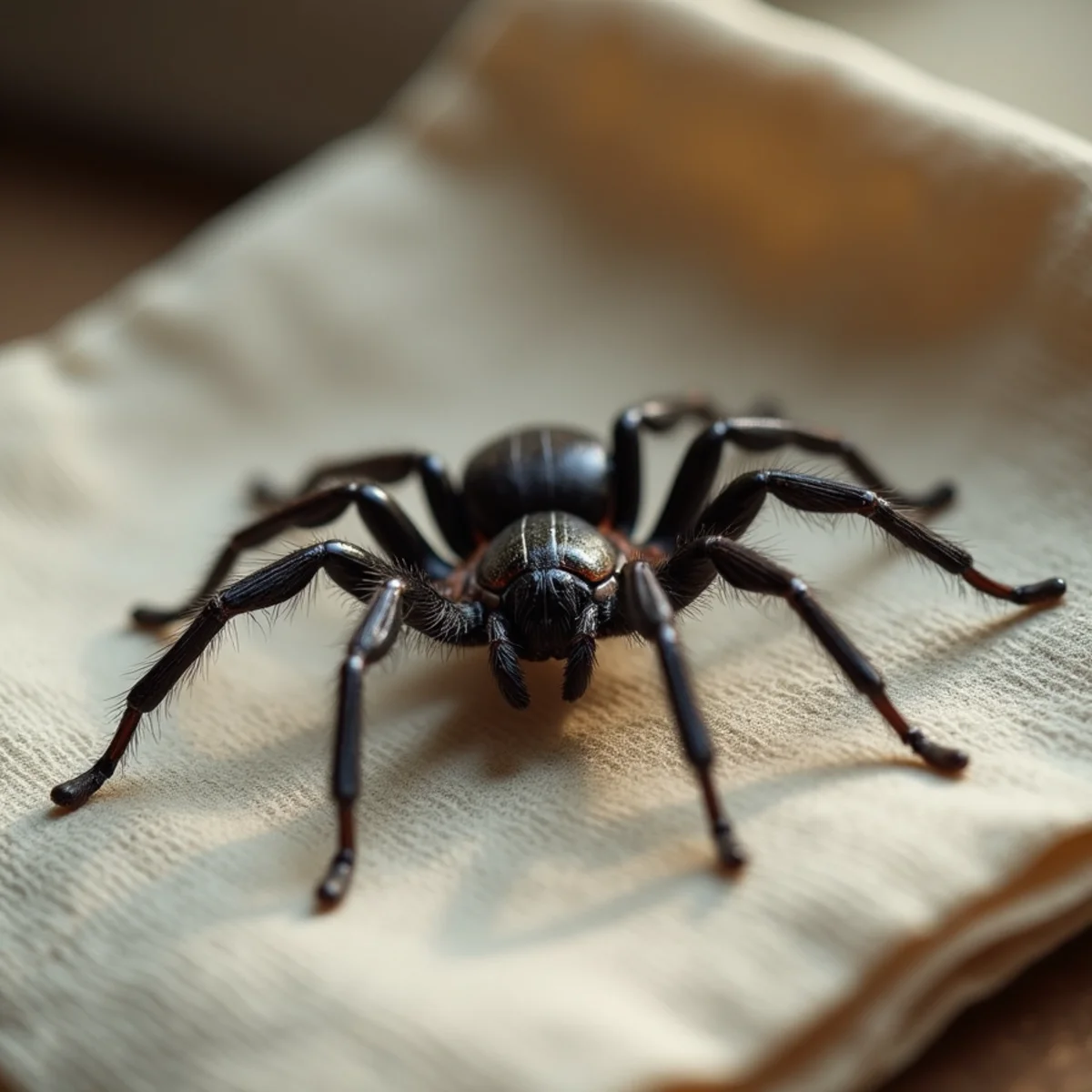
Where do black widows hide? A checklist
Black widows favor low, dark, dry, undisturbed spaces. When we inspect a Fresno property, these are the spots we check first, and they are worth checking yourself with a flashlight and gloves — never bare hands:
- Garage corners, shelves, and the undersides of workbenches
- Woodpiles and stacked firewood, especially against a wall
- Block-wall cavities, weep holes, and the gaps in cinder block
- Water-meter and irrigation-valve boxes
- Under patio furniture, grills and grill covers
- Beneath outdoor stairs, decks and crawlspace openings
- Stored boxes, buckets, and clutter in sheds and garages
- Children's play structures, playhouse corners, and sandbox lids
- Around exterior electrical and utility boxes
New homes are not exempt. Fresh block walls, construction gaps, and stacks of moving boxes all give young spiders cover, which is why newly built subdivisions see widows too. The common thread in every item above is darkness and stillness — anywhere a spider can build an undisturbed web and wait.
A practical way to use this checklist is a seasonal flashlight sweep. Because black widows hang belly-up in their webs, a light angled from below often catches the glossy abdomen and the red hourglass before you ever put a hand near. Check the undersides and back corners — the spots a casual glance skips — in the garage, along the base of block walls, and under any furniture or equipment that sits outside. Fifteen minutes with a flashlight a few times a year turns the riskiest spaces into known, cleared ones.

How to identify a black widow
The adult female is the one that matters for safety, and she is distinctive: about a half-inch body (larger with the legs), glossy jet-black, with a rounded abdomen and the famous red hourglass marking on the underside. Some females also show a reddish spot near the tip of the abdomen. She hangs belly-up in her web, so the hourglass is often visible from below.
Males and juveniles look different — smaller, lighter, often with tan, white or reddish markings and stripes — and are not considered a medical concern. The web itself is a clue too: black widow webs are strong, coarse and irregular, not the neat wheel-shaped orb of a garden spider, and they are built low and in sheltered spots.
The other thing to look for is the egg sac: a round, papery, tan or cream-colored ball roughly a quarter to a half inch across, often guarded in the web. Finding egg sacs means an established, breeding population — and removing them matters as much as removing the adults, because each sac can hold hundreds of spiderlings.
It is also worth distinguishing black widows from the other spiders Fresno homeowners worry about. The brown recluse, often feared, is not actually established in California, so a brown spider in the garage is far more likely a harmless house or wolf spider than a recluse. The common large spiders that build neat, wheel-shaped orb webs across a doorway overnight are nuisance spiders, not a medical concern. When in doubt, the combination of a glossy black body, the underside hourglass, a messy low web, and a papery egg sac is the specific profile that warrants treating a spider as a black widow.
What to do about a black widow bite
We are a pest control company, not medical providers, so the guidance here is simple and conservative: take a suspected black widow bite seriously and seek medical advice promptly. A bite can cause muscle pain and cramping, abdominal pain, sweating, and other symptoms that may develop over hours.
If you are bitten, wash the area with soap and water, apply a cold pack to reduce swelling, and contact a doctor, urgent care, or the California Poison Control System at 1-800-222-1222 for guidance. Poison Control is free, confidential, staffed around the clock, and can advise you on whether and where to seek care based on your symptoms.
Children, older adults, and anyone with a strong reaction should be evaluated without delay. Do not wait to "see how it goes" if symptoms are worsening. Once you are safe, clearing the spiders and their egg sacs from the property is our job — reducing the population lowers the odds of the next encounter.
A few things not to do also matter. Do not apply a tourniquet, cut the bite, or try to suck out venom — those old first-aid ideas can cause more harm than the bite. Do not ignore worsening symptoms in the hope they pass, and keep the bitten limb still and lower than the heart if you can. If you managed to safely capture or photograph the spider, bringing that to the clinician can help confirm what bit you, but never risk a second bite to collect it. When in doubt, the free, around-the-clock line at 1-800-222-1222 can walk you through what to do.
Keeping black widows out
Prevention works on two fronts at once: remove the spiders and their webs directly, and make the property less hospitable so new ones do not settle. On the direct side, physically de-webbing eaves, corners, garages and patios and removing every egg sac stops the next generation before it hatches — this physical removal is as important as any product.
On the habitat side, the goal is to eliminate the dark, undisturbed harborage they need:
- Clear clutter from the garage and shed, and store items in sealed bins off the floor rather than in open piles and cardboard.
- Move woodpiles away from the house and up off the ground, and wear gloves when handling firewood.
- Seal gaps around doors, weep screens, vents and utility penetrations so spiders cannot get inside.
- Reduce their food by keeping ants, crickets and other prey insects down with a perimeter treatment.
- Switch exterior lighting to warmer, insect-reducing bulbs or move fixtures away from doors to draw fewer insects at night.
Because black widows follow their prey and rebuild webs, homes with ongoing pressure do best on a recurring spider-control plan that re-de-webs and re-treats before the warm months when widows are most active.
The honest limitation of any spider treatment is contact. Spiders do not groom themselves the way ants do and often sit on their own silk rather than on treated surfaces, so a surface spray alone reaches them less reliably than it reaches insects. That is exactly why physical removal — knocking down webs and taking out egg sacs by hand — is not an add-on but the backbone of real black widow control, with product aimed into the cracks and voids where they actually rest. Cutting off their insect food closes the loop by giving new spiders no reason to settle.
Pairing spider work with a general perimeter plan is often the most efficient route for exactly this reason. Because black widows settle where the food is, a home that keeps ants, crickets, earwigs and moths knocked down around the foundation is a far less appealing place for widows to set up in the first place. The de-webbing and egg-sac removal handle the spiders already present; the reduced prey base discourages the next generation from moving in. It is the same two-front logic that works against most Fresno pests — treat what is here now, and change the conditions that invite more.
Frequently asked questions
Black widows are a quiet fixture of Fresno garages, woodpiles and block walls, and because they hide where hands go unseen, they deserve to be treated as a safety matter. Clearing the webs and egg sacs and cutting off their food is what keeps them from coming back. Call J&J Pest Control at (321) 496-4080 to clear black widows from your property.
Call (321) 496-4080