
stinging-insects
Yellowjacket Nest in the Ground: Safe Steps for Fresno Yards
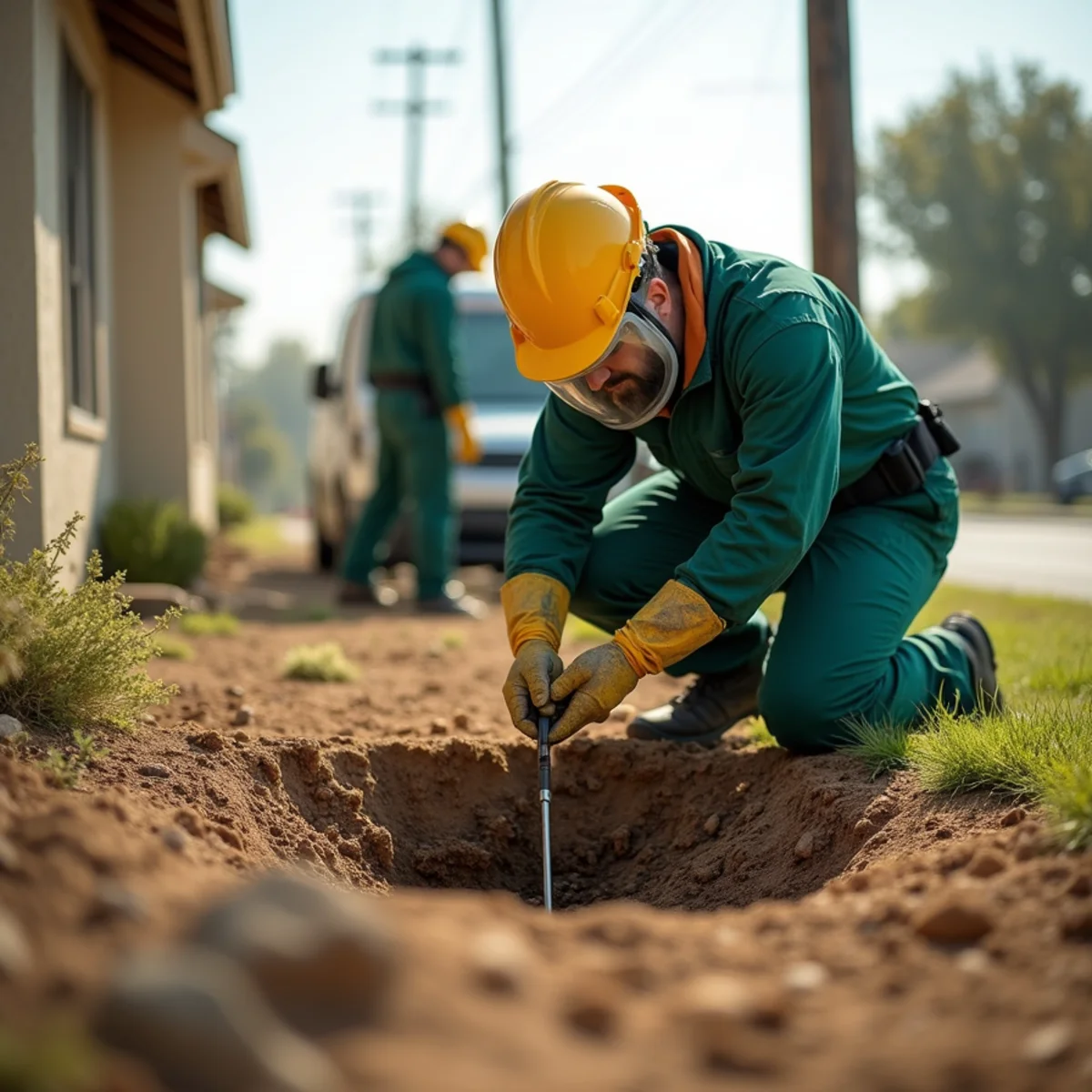
If yellowjackets are streaming from a hole in your yard, you have a ground nest. Watch from a safe distance to pinpoint the entrance, mark it without getting close, and keep people and pets away. Do not pour anything in or try store spray — a disturbed ground nest can send up dozens of stings. Call for professional removal.
How do you find a yellowjacket nest in the ground?
Unlike paper wasps, which hang their open, umbrella-shaped combs under eaves where you can see them, yellowjackets often nest underground — in an old rodent burrow, a slope, a landscape void, or the base of a wall. That hidden quality is a big part of what makes them dangerous: you can be mowing, gardening or playing in the yard and never know a colony of thousands is right beneath your feet until something disturbs the entrance.
The way to locate a ground nest is to watch the flight path from a safe distance. On a warm, active day, yellowjackets fly a direct, repetitive "beeline" in and out of a single opening — a steady stream going to and from one spot in the lawn, a slope, or along a foundation. Stand well back, maybe ten or more feet, and watch for a minute; the traffic will lead your eye to the entrance hole. Early morning or dusk, when activity is lower and the colony is mostly home, can be a safer time to observe.
Once you have spotted the entrance, mark the location from a distance so you — and whoever removes it — can find it again, without ever approaching the hole. A small flag, a stake, or a lawn chair set several feet away works. In Sanger, Oakhurst and other foothill-edge and orchard-adjacent areas around Fresno, these ground nests are common in summer, and homeowners frequently discover them the hard way.
Be aware that a single opening on the surface can sit above a surprisingly large underground nest, sometimes the size of a basketball or bigger by late season, excavated in a cavity below the lawn. That is why probing or digging is so dangerous: you have no way to judge the size of the colony from the small hole you see, and disturbing the soil near it can breach the nest directly. It also explains why "just one or two wasps" around a spot in the yard can be misleading early in the season, when a young colony is still small and quiet before it explodes over the summer. If you notice even light but consistent traffic to one point in the ground, treat it as a nest in the making and keep an eye on it from a safe distance. Finding the nest calmly, from a distance, is the first step to dealing with it safely.
Need help now, not later?
Call (321) 496-4080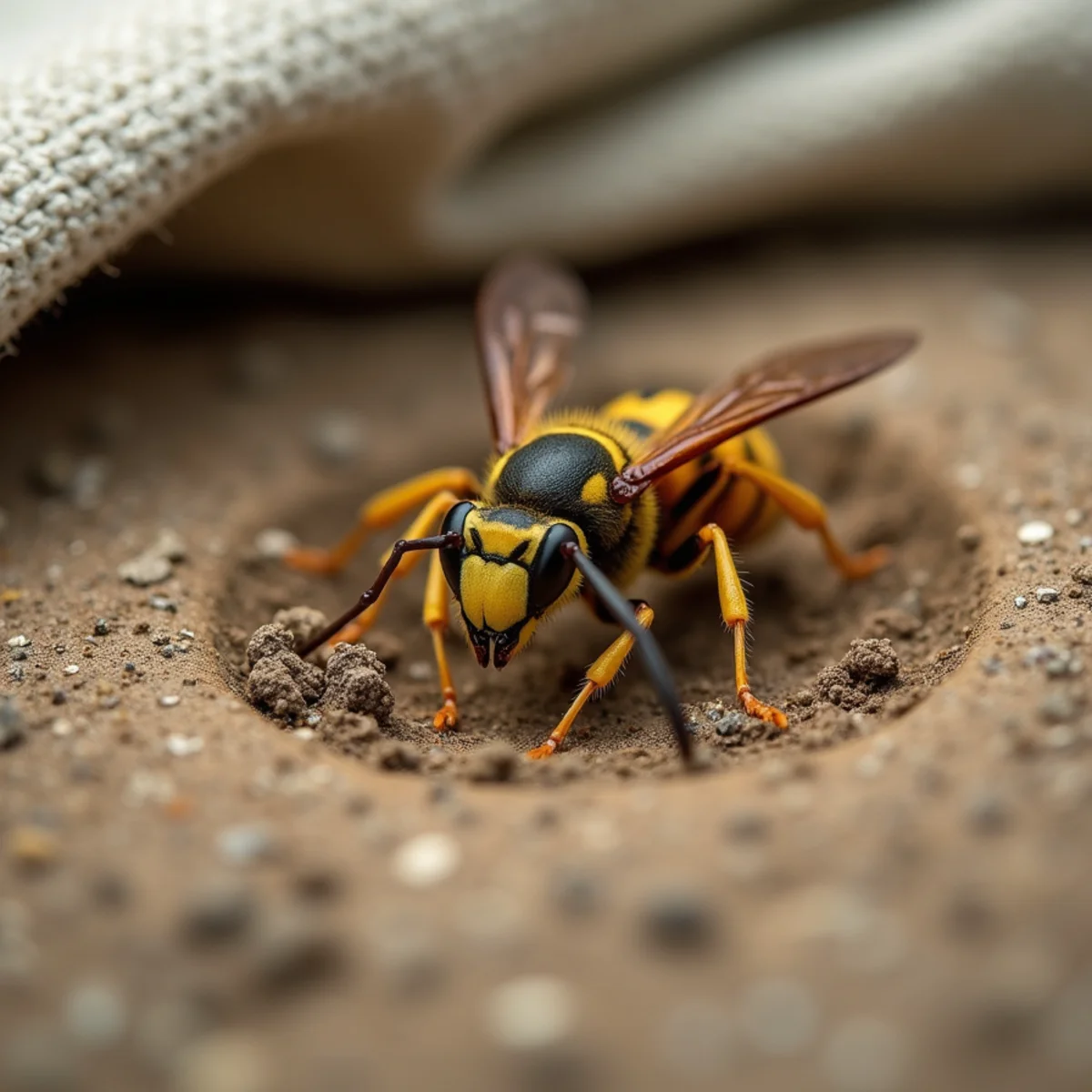
Why are ground yellowjackets worst in late summer?
Yellowjacket danger is seasonal, and understanding the curve helps you judge how careful to be. A colony starts small in spring, founded by a single overwintered queen. Through the warm months it grows, and by mid-to-late summer and into fall it can number in the thousands. That population explosion is the first reason late season is the worst — there are simply far more wasps to defend the nest and to forage.
The second reason is a behavior shift. As the colony peaks and natural food gets scarcer, yellowjackets turn into aggressive scavengers, showing up uninvited at picnics, trash cans, pet food bowls and anywhere sweet or protein-rich food is out. This is when the backyard barbecue becomes a hazard and when stings spike across Fresno County. They are bolder, hungrier and more numerous all at once.
Combine that with the hidden, underground location, and you have the perfect setup for an accident. A nest you cannot see, holding thousands of increasingly defensive wasps, right where you mow or walk — one bump of the entrance, one mower passing over the hole, and the colony can erupt in a defensive swarm that delivers dozens of stings in seconds. For anyone allergic, that is a genuine medical emergency. Treating a ground nest earlier in the season, when the colony is smaller, is easier and safer; but by late summer, the stakes are high enough that professional removal is clearly the right call.
Why is treating a ground nest yourself so risky?
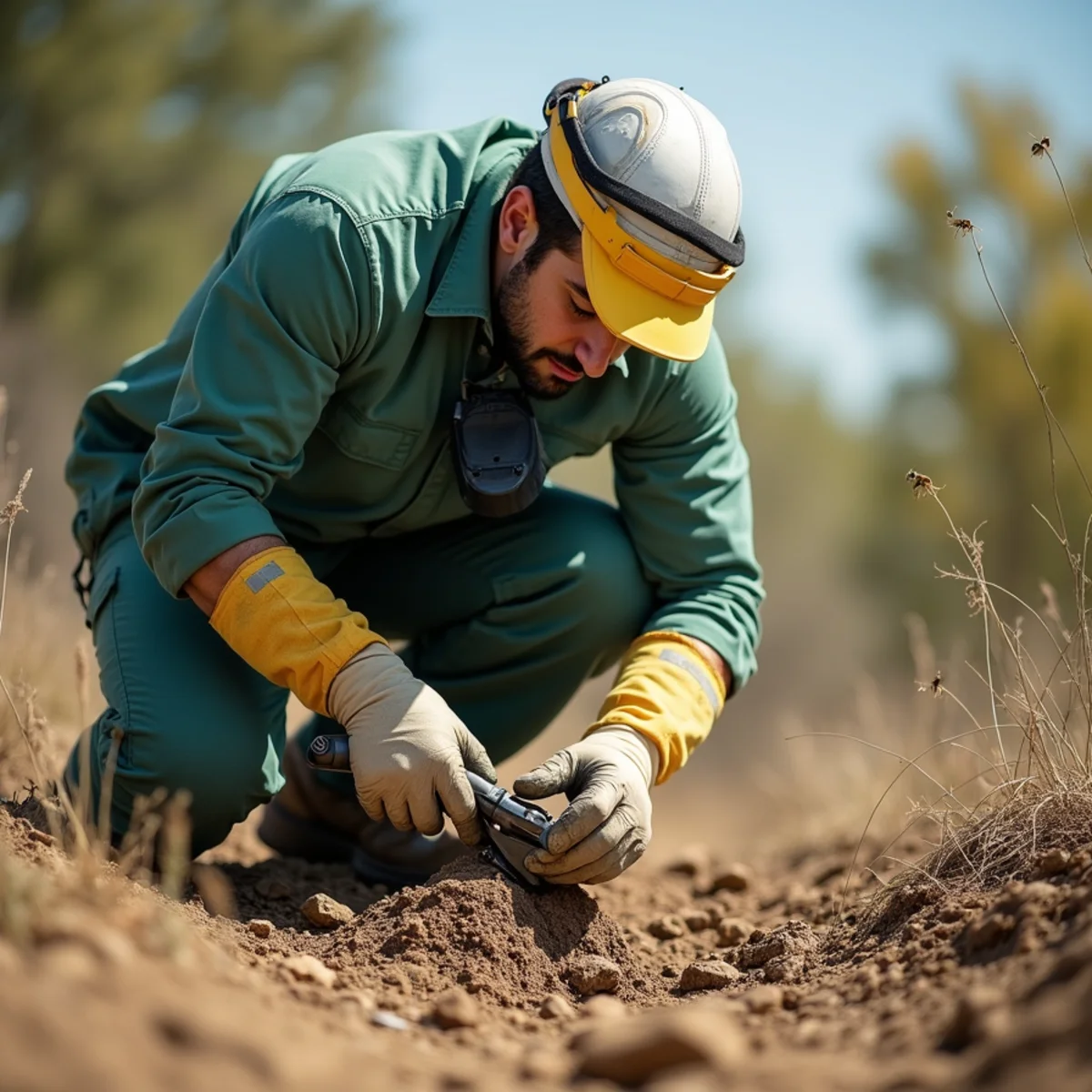
The internet is full of folk remedies for ground yellowjacket nests — pouring in gasoline, boiling water, or soapy water, dropping in a store wasp-spray nozzle, even covering the hole with a bowl. We strongly advise against all of them, and it is worth being honest about why, because the risk is not theoretical.
A ground nest extends well beyond the single entrance you can see. Pouring liquid in rarely reaches the full colony, and the act of approaching and disturbing the entrance is exactly what triggers a mass defensive response — often while you are standing right over it. Store aerosol sprays have the same problem: they do not penetrate the underground nest, and spraying the entrance provokes the colony. Many of the worst sting incidents happen precisely when someone tries a DIY treatment and the wasps pour out faster than they can retreat. Gasoline and other improvised chemicals add fire and environmental hazards on top of the sting risk.
There is also the simple fact that yellowjackets, unlike honey bees, do not die after a single sting and can sting repeatedly. A defending colony can deliver dozens of stings in moments. For anyone with a sting allergy, that is life-threatening; even for those without, a mass stinging is painful and dangerous. The honest trade-off is stark: a DIY attempt saves a service fee but risks a trip to the emergency room, and it frequently fails to eliminate the colony anyway. If multiple stings do occur and someone shows a reaction, treat it as a medical situation and contact a doctor, urgent care, or the California Poison Control System at 1-800-222-1222.
What's the safety checklist for a ground nest?
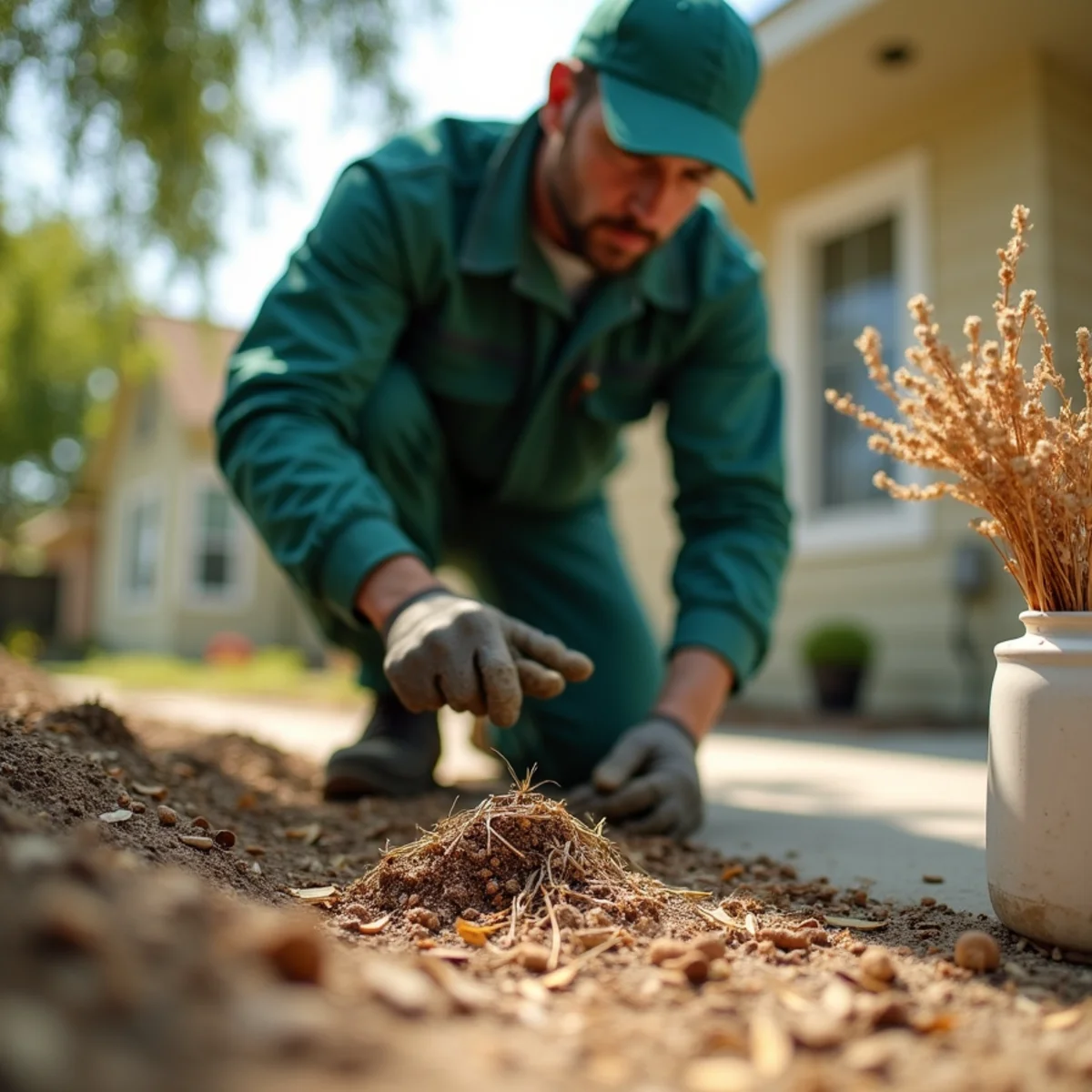
Until the nest is professionally removed, your job is to keep everyone safe and avoid provoking the colony. Here is a straightforward safety checklist for a yellowjacket ground nest in your Fresno yard.
- Keep your distance. Stay at least several feet from the entrance at all times. Yellowjackets defend the area around the nest, not just the hole.
- Keep children and pets away from the area. Rope it off or block access if you can do so from a safe distance. Curious kids and dogs are the most common sting victims.
- Mark the entrance from afar. Place a flag or stake a safe distance away so the nest can be found again, without approaching it.
- Do not mow, trim, blow or dig near the nest. Vibration and disturbance are exactly what set off a defensive swarm. Pause yard work in that zone entirely.
- Do not pour anything in or spray the hole. No water, gasoline, soap or store aerosol — these provoke the colony and rarely work.
- Avoid wearing strong scents and bright floral colors near the area, which can attract foragers, especially late in the season.
- Keep food, drinks and trash covered outdoors, since late-summer yellowjackets scavenge aggressively and will be drawn toward people.
- Know your household's allergy status. If anyone is allergic, treat the nest as an urgent hazard and keep that person well away.
- Call for professional removal rather than waiting for the colony to "die off" on its own, which can take until cold weather while the hazard persists.
Work the checklist and you contain the risk while you arrange proper treatment.
How does professional removal work?
Professional treatment of a ground nest is fundamentally different from a DIY attempt because it targets the colony correctly and manages the defensive response. The first step is confirming the nest and its entrance — watching the flight path to be sure of the exact opening and to understand the colony's size and activity. The species and nest type shape the approach, since a ground yellowjacket colony is handled very differently from an open paper-wasp comb.
Treatment is then applied directly to the nest or its entrance, timed to when the colony is most concentrated inside — typically early morning or evening — so the product reaches the whole colony rather than just the foragers that happen to be out. This is the crux of why professional removal works and spraying stray wasps does not: the nest is the target, and treating it at the source is the only thing that ends the problem. A technician works with the right protective equipment and technique to manage the defensive behavior that makes these nests dangerous.
After treatment, accessible nests are removed and activity is confirmed to have stopped, since a treated ground nest can take a short time to go fully quiet. We also point out the spots likely to be reused and can treat common nesting areas before peak season on request, so you are not fighting new nests every few weeks. For a nest threatening a door, a play area, or an allergic family member, we hold same-day capacity when you call by noon, Monday through Saturday. A ground yellowjacket nest is one of the clearest cases where the safe, effective move is to let a professional handle it.
Frequently asked questions
A yellowjacket nest in the ground is one of the most dangerous pest problems a Fresno yard can hide — thousands of defensive wasps where you walk and mow, worst in late summer. Keep your distance, mark it from afar, pour nothing in, and let a professional treat it at the source. Call J&J Pest Control at (321) 496-4080 for safe, same-day-capable removal.
Call (321) 496-4080